How to Diversify Your Channel Mix with MMM Testing
Klover cut Meta iOS dependency from 75% to under 45% and improved blended CAC by 12% using MMM and geo holdout testing. A four-phase channel diversification framework.
Why Channel Concentration Is a Growth Risk
Problem: When 70%+ of your customer acquisition comes from a single advertising channel, you're one algorithm change, policy update, or platform outage away from catastrophic revenue loss.
Solution: Use Marketing Mix Modeling (MMM) combined with systematic incrementality testing to identify, validate, and scale diversification opportunities without sacrificing efficiency.
Outcome: Reduce channel concentration risk from 0.78 to <0.40 (Gini coefficient) while maintaining or improving overall CAC.
For: Growth teams, marketing leaders, and data teams at companies with $500K+ monthly ad spend concentrated in 1-2 channels.
BlueAlpha built this diversification framework with Klover, a consumer fintech app that had 75% of paid spend concentrated in Meta iOS. Over 16 weeks of systematic MMM-driven testing, the team reduced Meta dependency to under 45%, improved blended CAC by 12%, and dropped the Gini coefficient from 0.78 to 0.42.
When to Use This Channel Diversification Framework
Use Case | Signals It Fits |
|---|---|
Over-reliance on Google/Meta | 70%+ of conversions from single channel |
Platform risk concerns | Recent algorithm changes impacting performance |
Board mandate for diversification | "What's our backup plan?" questions arising |
Plateau in primary channel | Diminishing returns despite budget increases |
Compliance/regulatory pressure | Industry-specific advertising restrictions emerging |
Prerequisites for Channel Diversification Testing
Minimum 3-6 months of historical spend and conversion data
Ability to track conversions across multiple channels
Budget flexibility to test new channels (10-20% of total)
MMM capability or vendor (internal or external)
Executive buy-in for temporary efficiency trade-offs
Phase 1: Diagnose Your Concentration Risk (Week 1-2)
Goal: Quantify your vulnerability and establish baseline metrics.
Actions:
Calculate channel concentration using Gini coefficient
Pull last 6 months of spend by channel
Calculate cumulative spend percentages
Plot Lorenz curve and derive Gini score
Benchmark: >0.6 = high risk, 0.4-0.6 = moderate, <0.4 = healthy
Map your current channel mix
Document spend, conversions, and CPA by channel
Identify top 3 channels by volume
Calculate percentage of total conversions per channel
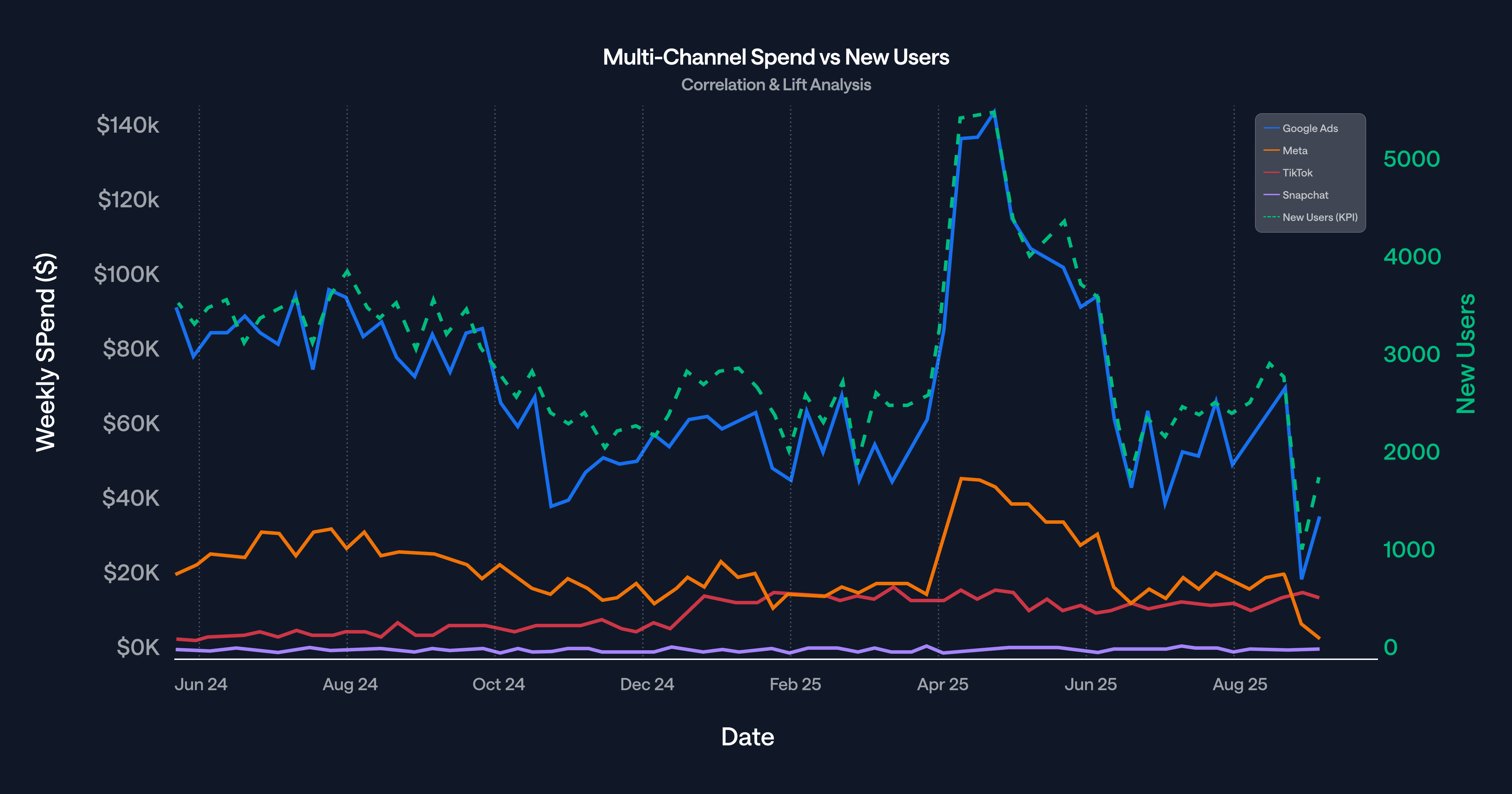
This visualization shows the correlation between different marketing channels and your primary KPI over time, helping identify which channels move together and which provide true diversification.
Assess platform-specific risks
Review recent policy changes
Analyze historical volatility (CPM/CPC trends)
Document any account warnings or issues
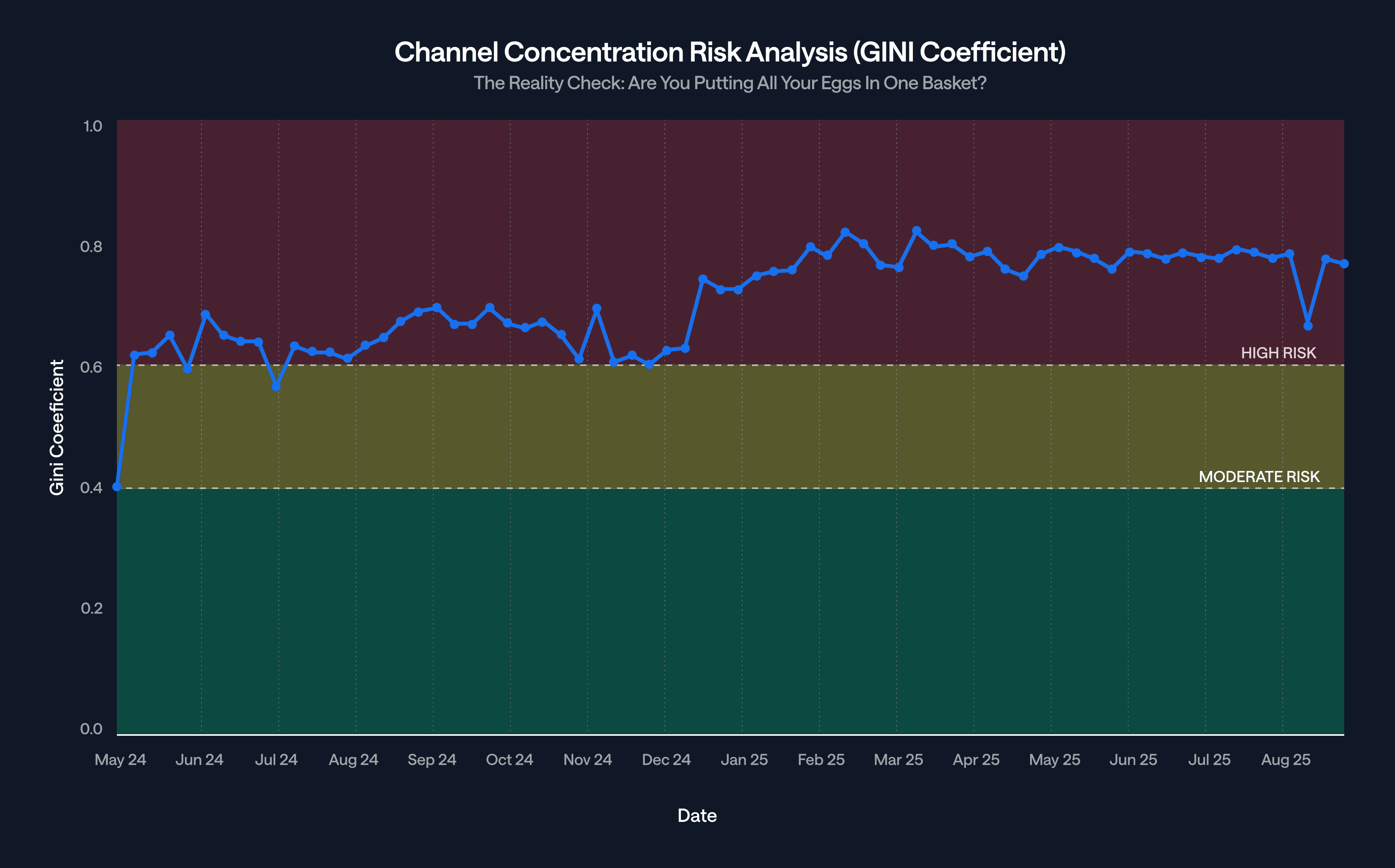
A “Gini Coefficient chart” displays concentration risk over time, with clear zones for high risk (>0.6) and moderate risk (0.4-0.6), helping stakeholders immediately understand the urgency of diversification.
Phase 2: Build Your Measurement Foundation (Week 2-4)
Goal: Deploy MMM to understand true channel contribution beyond last-click attribution.
Actions:
Set up Marketing Mix Model
Define primary KPI (first-time conversions recommended)
Aggregate weekly spend data by channel
Include external factors (seasonality, promotions)
Run initial model with 6+ months of data
Identify incrementality testing opportunities
Rank channels by MMM-attributed contribution
Flag channels showing high last-click but low MMM attribution
Prioritize 3-5 channels for testing
Design test roadmap
Map out 4-6 week testing windows
Calculate minimum detectable effects (aim for 10-15% lift detection)
Allocate 10-20% of budget for testing
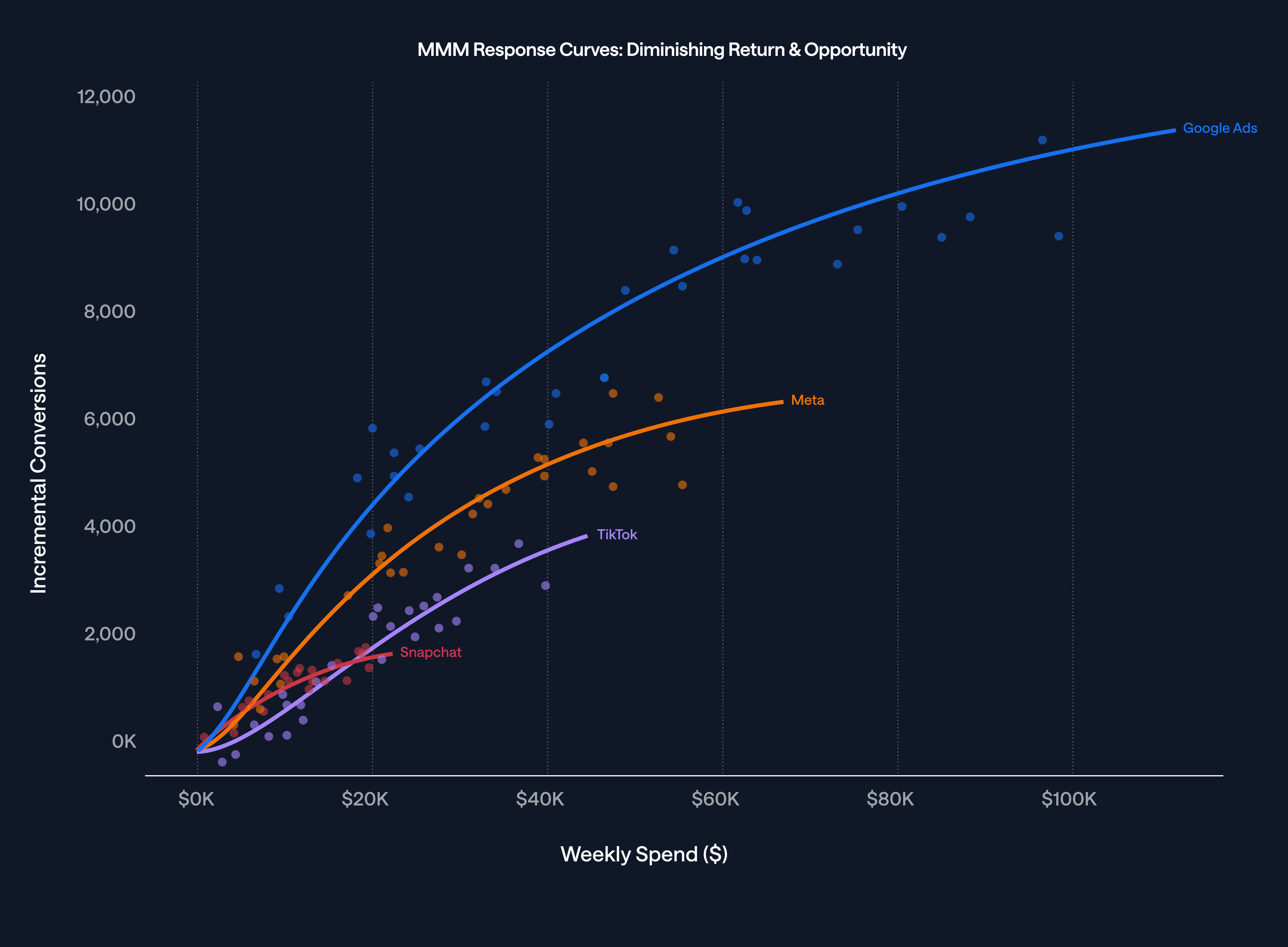
MMM response curves showing diminishing returns on primary channel and opportunity areas in emerging channels.
Phase 3: Systematic Testing & Validation (Week 4-12)
Goal: Validate diversification opportunities through controlled experiments.
Actions:
Run geo-based incrementality tests
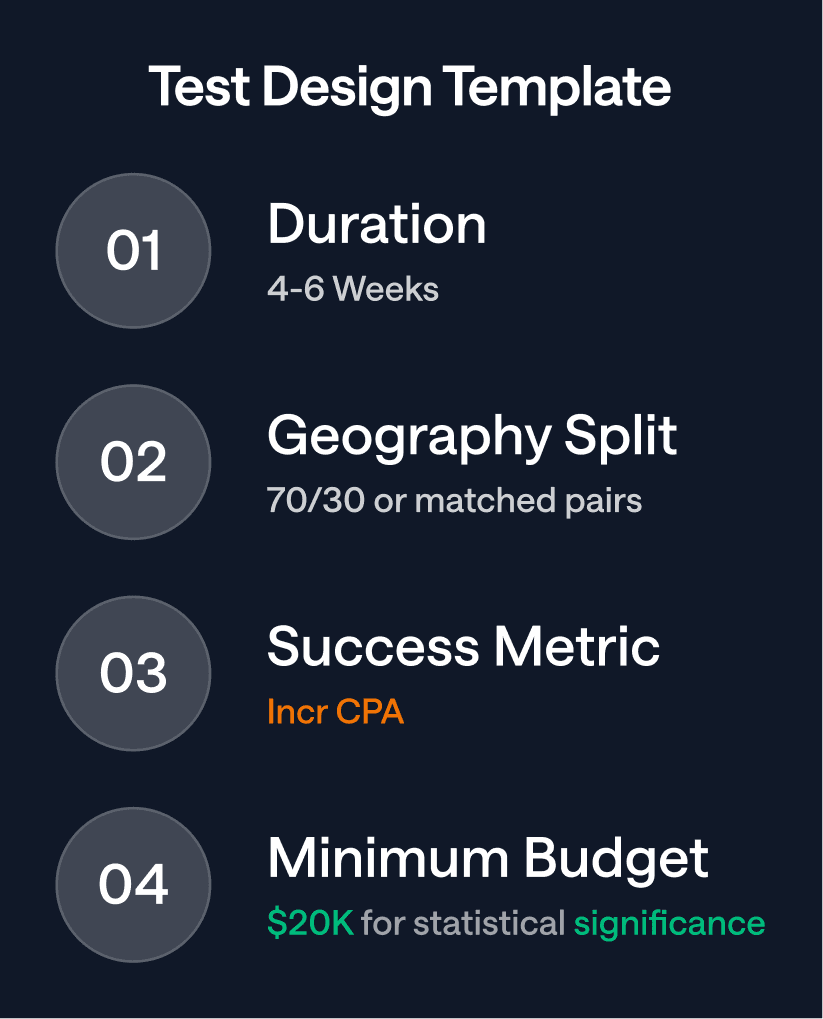
Execute channel-specific tests
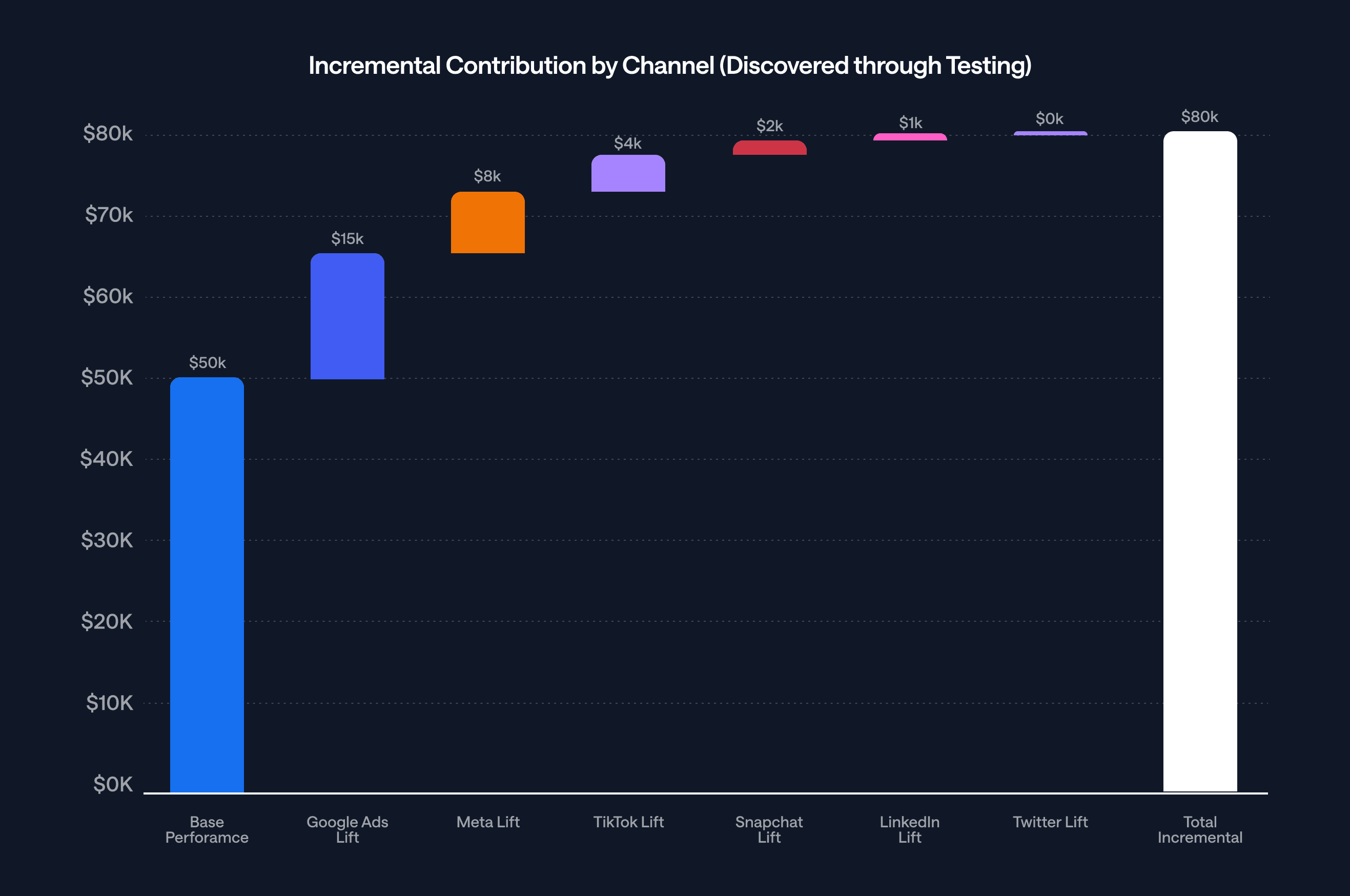
Real-world example progression (Klover case study):
Week 1-4: TikTok geo-lift (discovered 48% incrementality)
Week 5-8: Meta reduction test (found plateau at $60K/week)
Week 9-12: Apple Search scale test (validated efficiency at higher spend)
Diversification candidates are not limited to other digital platforms. Offline channels (out-of-home, direct mail, CTV, podcast) often carry the least correlation with your dominant channel, which is exactly what reduces concentration risk, and they are testable with the same geo holdout design used above. The OOH measurement playbook covers the market selection, flight length and incremental CPA calculation an offline test requires.
Document learnings systematically
Record actual vs. predicted lift
Calculate incremental CPA by funnel stage
Phase 4: Scale and Rebalance Your Channel Portfolio (Week 12+)
Goal: Reallocate budget based on validated incrementality while monitoring concentration metrics.
Actions:
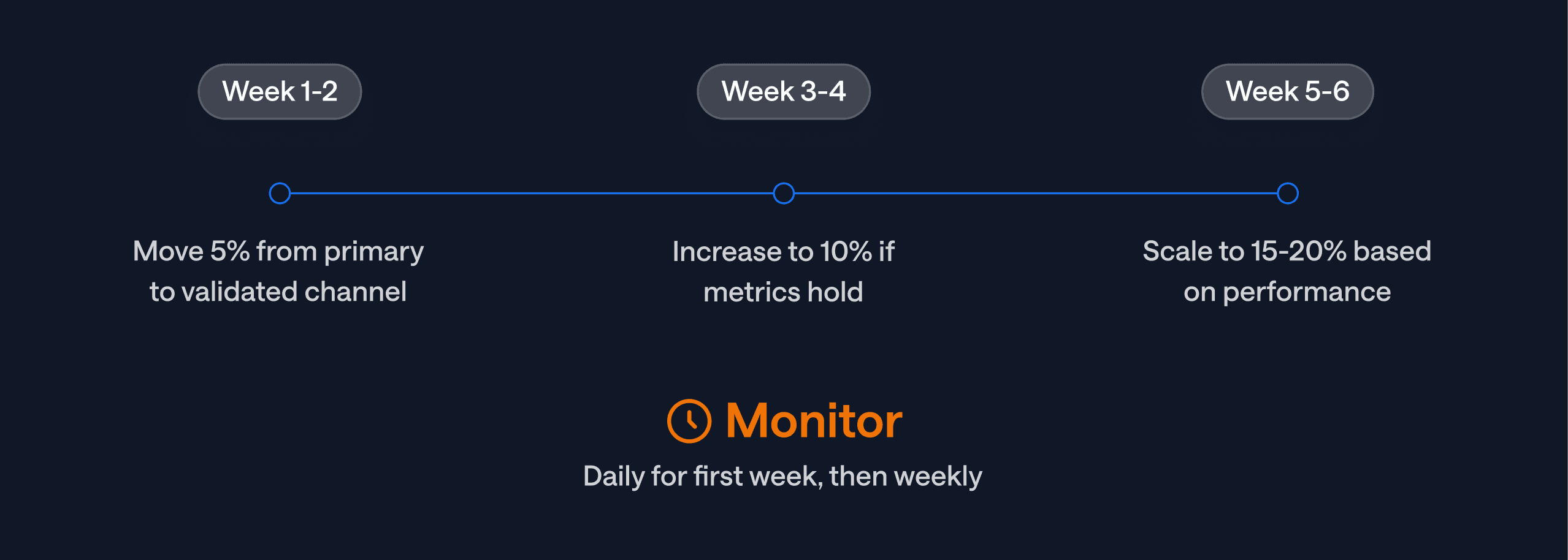
Implement phased reallocation
Optimize new channels for efficiency
Test creative formats native to each platform
Adjust bidding strategies based on platform algorithms
Implement platform-specific conversion tracking
Establish channel portfolio targets
Primary channel: Max 50% of spend
Secondary channels: 20-30% each
Testing budget: Always maintain 10%
Gini coefficient target: <0.45
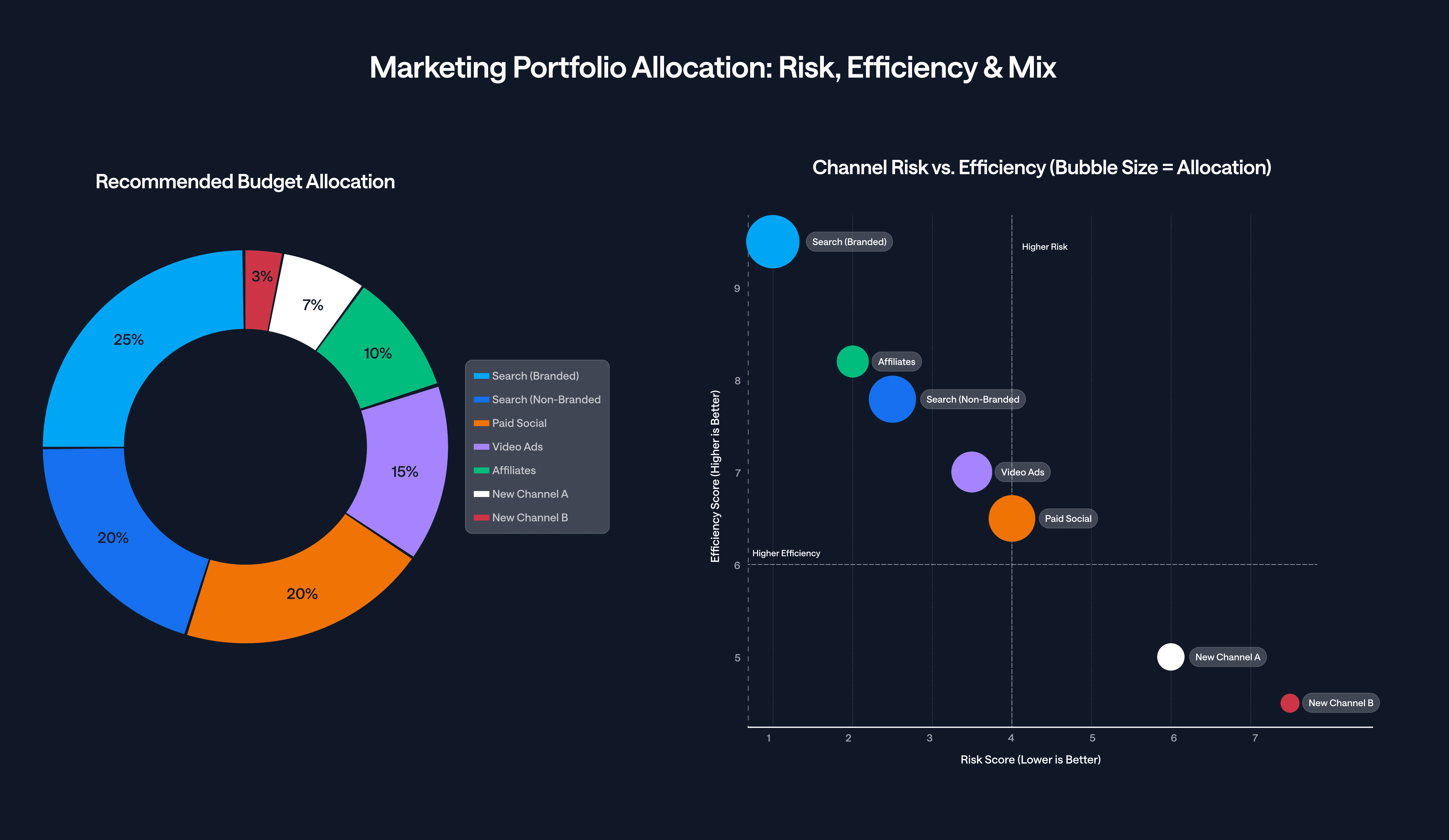
A portfolio allocation chart will show your recommended channel mix based on risk tolerance and efficiency goals.
Metrics and Monitoring for Channel Concentration Risk
Primary Metrics
Gini Coefficient: Track weekly, alert if >0.6
Incremental CPA by Channel: Compare to blended goal
Channel Revenue Contribution: MMM-attributed vs last-click
Secondary Metrics
Platform health scores (account warnings, policy violations)
Creative fatigue indicators by channel
Audience overlap percentage between channels
Reporting Cadence
Weekly: Channel performance and concentration metrics
Monthly: MMM refresh and incrementality test results
Quarterly: Strategic channel portfolio review

Four Diversification Mistakes That Waste Test Budget
❌ Testing too many channels simultaneously
Dilutes budget below statistical significance thresholds
Solution: Prioritize 2-3 channels maximum per quarter
❌ Ignoring platform-native best practices
Copying Google Ads strategies to TikTok/Meta
Solution: Invest in platform-specific creative and targeting
❌ Pulling back too quickly on underperforming tests
Platform learning phases require 2-3 weeks minimum
Solution: Commit to full test duration before decisions
❌ Over-correcting based on single test results
One test doesn't account for seasonality/external factors
Solution: Validate with follow-up tests or longer duration
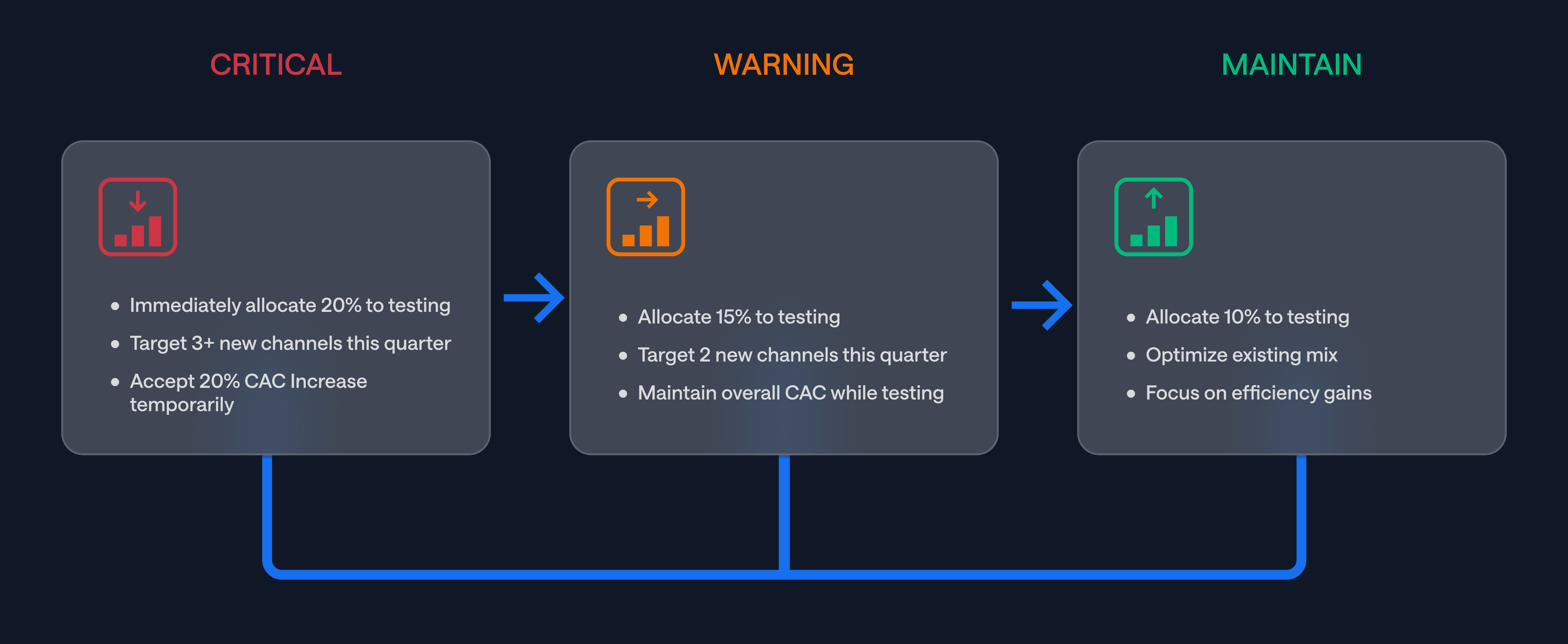
Decision Framework for Channel Scale, Hold, or Cut
Benchmarks and the Klover Diversification Case Study
Benchmark Data
Healthy channel mix by vertical:
SaaS: No channel >40%, 4+ active channels
E-commerce: No channel >50%, 3+ active channels
Mobile apps: No channel >45%, 5+ active channels
Success Story Snapshot
Klover's growth team reduced their Meta iOS dependency from 75% to under 45% over 16 weeks using this framework. Despite initial concerns about efficiency loss, their blended CAC actually improved by 12% as they discovered undervalued channels through systematic testing. Their Gini coefficient dropped from 0.78 to 0.42, significantly reducing platform risk. The engagement ran through BlueAlpha's decision layer.
Replication Checklist: Twelve-Week Diversification Plan
Week 1
☐ Calculate current Gini coefficient
☐ Document channel concentration percentages
☐ Identify top 3 diversification candidates
Week 2
☐ Set up MMM or engage vendor
☐ Design first incrementality test
☐ Secure budget approval for testing
Week 4
☐ Launch first geo-based test
☐ Establish monitoring dashboard
☐ Schedule weekly review cadence
Week 8
☐ Analyze test results
☐ Design follow-up validation tests
☐ Present initial findings to stakeholders
Week 12
☐ Implement budget reallocation
☐ Document playbook customizations
☐ Set quarterly review schedule
BlueAlpha's decision layer automates the concentration diagnosis, MMM integration, and incrementality testing described in this playbook. The weekly refit cadence means your channel mix decisions are grounded in last week's data, not last quarter's.
Book a 30-Minute Strategy Call
FAQ
What is a Gini coefficient and how does it measure channel concentration risk?
The Gini coefficient measures how unevenly your spend is distributed across channels. A score of 1.0 means all spend is in one channel. A score of 0.0 means spend is perfectly equal across all channels. For marketing portfolios, above 0.6 is high risk (one algorithm change can destroy acquisition), 0.4 to 0.6 is moderate, and below 0.4 is healthy diversification.
How much budget should I set aside for testing new channels?
Reserve 10 to 20% of your total paid media budget for channel testing. This needs to be large enough to detect a 10 to 15% lift in your primary KPI with statistical significance. If your test budget is too small, you will not be able to distinguish signal from noise, and the test result will be inconclusive regardless of whether the channel works.
How long does it take to diversify away from a single dominant channel?
The full framework runs 12 or more weeks: two weeks for diagnosis, two weeks for MMM setup, four to eight weeks for systematic testing, and ongoing for reallocation. Klover made decisive moves within 30 days of measurement going live, but the broader channel portfolio rebalancing continued over the full 16-week arc.
Can I diversify channels without an MMM?
Not reliably. Without an MMM, you are relying on platform-reported metrics to evaluate new channels, and those metrics consistently overstate each platform's contribution. An MMM provides the baseline contribution estimates that tell you which channels are genuinely incremental and which are claiming credit for conversions that would have happened anyway.
What is the right number of active channels for a healthy marketing mix?
There is no universal number, but benchmarks by vertical suggest SaaS companies should have no single channel above 40% of spend with four or more active channels, e-commerce should have no channel above 50% with three or more, and mobile apps should have no channel above 45% with five or more. The Gini coefficient is a better metric than channel count because it captures concentration, not just breadth.
Should I test channels sequentially or simultaneously?
Sequentially, two to three at most per quarter. Testing too many channels at once dilutes your test budget below the statistical significance threshold for each individual test, and you will end up with inconclusive results across the board. Prioritize by MMM-attributed contribution gap: test the channels where the gap between last-click attribution and MMM attribution is largest.

